Pocket Prep Nursing 2026
- 4.6
- Rating
- 100.00K
- Installs
- Free
- Price
 Analysis by App-foxy
Preparing for a nursing certification exam can feel less like studying one subject and more like managing a moving target. You need to remember clinical details, recognize the wording used in exam questions, and find enough uninterrupted time to practise. I tested Pocket Prep Nursing as a study companion for that exact problem, and I found its strongest idea to be simple: turn spare minutes into focused question practice rather than asking you to build a complete study system from scratch.
This is an education app from Pocket Prep, Inc., aimed at people preparing for nursing certification exams. It is free to install, rated for Everyone, and supports devices running Android 8.0 or later. The app has reached over 100 thousand installs and holds a 4.6 average from more than 800 ratings, which suggests that it has found a useful place among nursing students and working professionals. My experience was positive overall, but the app makes the most sense when you treat it as a question-practice tool, not as your only source of nursing education.
How Pocket Prep Nursing fits into real exam preparation
The app brings together practice material for 36 nursing certification exams, with more than 28 thousand questions and mock tests. That breadth is important because “nursing exam preparation” is not one uniform task. A learner preparing for a specialty certification needs a different emphasis from someone revising broad nursing knowledge, and choosing the correct exam area before starting is one of the first decisions that affects whether the app feels useful.
You May Also Like

 Blood Strike: 2.5 Anniversary
Blood Strike’s Loadouts Turn Every Drop Into a Tactical Gamble
A close look at Blood Strike’s custom loadouts: how fast access to signature weapons reshapes its battle royale rhythm, rewards preparation, and narrows the gap between fights.

 Pandora - Music & Podcasts
Pandora’s Music Is Easy to Start, but Harder to Recover
Pandora’s strength is its low-effort path from a seed to a station. Its weak spot is how much confidence it asks you to place in connection, setup, and quiet recovery.

 8 Ball Pool
 Is Built on Rivalries, Rematches, and Routine
A close look at the rivalries, rematches, shared routines, and unanswered safety questions that turn a quick pool match into a persistent mobile community.

 Samsung Music
’s Quiet Strength Is Playing What You Already Own
Its reach comes less from spectacle than from dependable access to a personal library. That simplicity is both the app’s strongest retention engine and its ceiling.

 AccuWeather: Weather Radar
AccuWeather Review: A Quick, Clear Forecast for Everyday Decisions
For everyday plans, the best forecast is the one you can understand quickly. AccuWeather makes rain timing, radar, and local conditions easy to act on, with a few trade-offs.

 Hill Climb Racing
Why Hill Climb Racing Still Turns Crashes Into One More Run
A tiny car, a bumpy hill and one more upgrade: Hill Climb Racing keeps resurfacing because its simple chaos makes every near-miss feel personal.
More From Our News Desk



I would begin by selecting the certification that matches my actual target, then use the question bank to identify weak areas rather than trying to complete questions randomly. The large library can otherwise become distracting. Having thousands of questions available sounds reassuring, but quantity only helps when it is connected to a plan: diagnose gaps, review explanations, revisit missed concepts, and then test the same topic again after some time has passed.
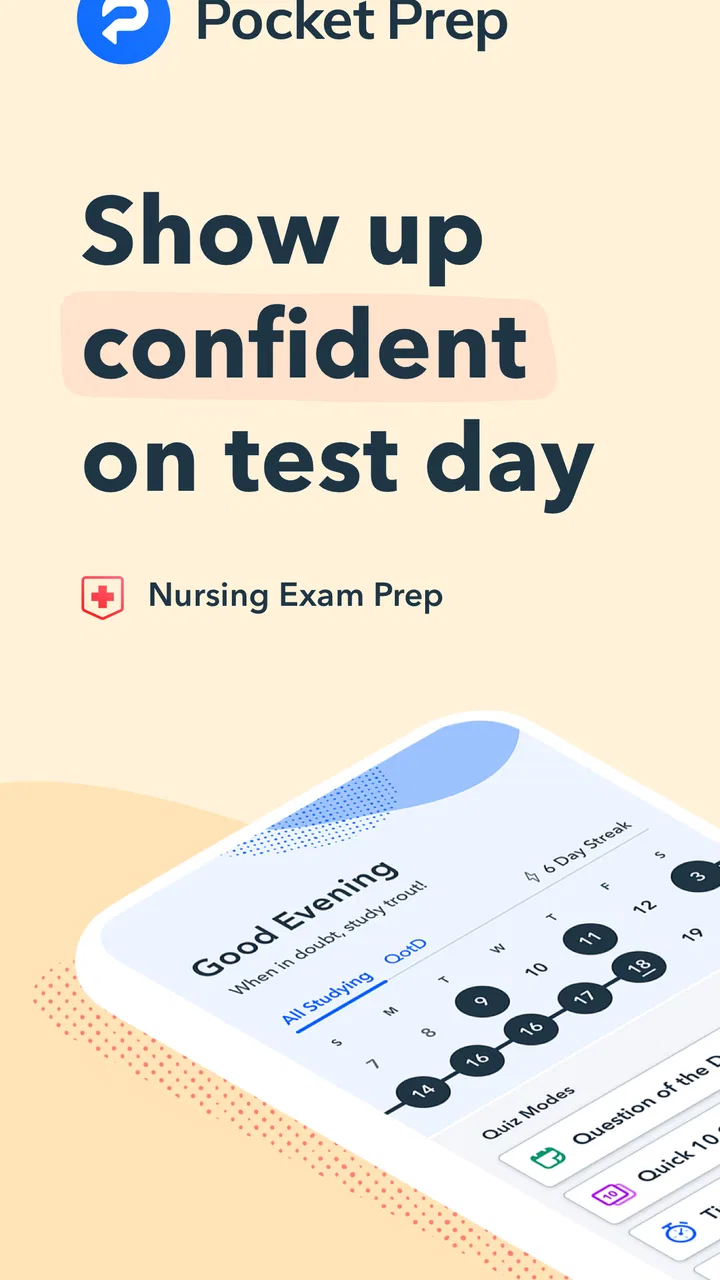
The app is particularly well suited to short sessions. I could imagine opening it during a commute, between clinical responsibilities, or while waiting for an appointment and completing a small set of questions. That is more realistic for many nursing learners than reserving a perfectly quiet hour every day. The important distinction is that these short sessions should support deeper study, not replace it.
A practical weekday routine would be to answer a handful of questions in the morning, note the topics behind any mistakes, and reserve a longer evening session for reading textbooks or class material on those subjects. This workflow prevents a common mistake: treating a correct answer as proof that the underlying concept is fully understood. Sometimes a guess is correct for the wrong reason, and question practice is most valuable when I examine that difference honestly.
What the free starting point actually means
The app is free to download, so trying it does not require an upfront purchase. That makes it easy to check the interface, browse the available exam focus, and decide whether the question style fits your learning habits before committing money. For someone comparing several nursing study tools, this free entry point is a genuine advantage because the decision can begin with hands-on testing rather than a promise.
Paid access is handled through in-app purchases priced from $20.99 to $124.99 per item. Those are the confirmed purchase boundaries, but I would not treat the lower figure as the guaranteed cost of the exact study package you want. The relevant value depends on which exam content and access option are offered at the time you choose to upgrade. In other words, the free version is useful for evaluation, while the paid value should be judged against the particular certification and study period you need.
This distinction matters for budgeting. A learner with a short revision window may see a paid option differently from someone who expects to study across several months. I would first use the free portion to confirm that the questions are relevant and that the explanations help me learn. Only then would I compare the available purchase with the price of a printed review book, a course, or a tutoring arrangement. The app can be economical, but it is not automatically the cheapest choice for every learner.
Where the question bank delivers real value
The most useful part of the experience is the shift from passive reading to active recall. Instead of highlighting pages and hoping the information stays available later, I have to commit to an answer. That exposes uncertainty quickly. It also gives a more honest picture of whether I can apply a concept under pressure, which is closer to the mental work required in a certification exam than simply recognizing a familiar paragraph in a textbook.
Mock tests add another layer. They are valuable not only because they provide more questions, but because they encourage me to practise staying focused through a longer sequence. A learner who performs well in isolated questions may still struggle with fatigue, pacing, or changing topics. I would use shorter quizzes for daily learning and mock tests as checkpoints, rather than using full tests every time I open the app.
One non-obvious benefit of a broad question bank is that it can reveal patterns in mistakes. If I repeatedly miss questions involving prioritization, delegation, or a particular clinical area, that pattern is more meaningful than one disappointing score. I would keep a simple error log outside the app with three columns: the topic, why my answer was wrong, and what rule or clue should guide me next time. That turns the app from a stream of questions into a feedback loop.
Another useful tactic is to separate knowledge errors from reading errors. When I miss a question, I ask whether I lacked the nursing concept, overlooked a qualifier, or selected an answer before comparing all options. This is especially important with certification-style questions, where the wording can be as challenging as the subject matter. The app supplies practice; the learner still has to perform this diagnosis.
How I would use it alongside other study resources
I would not replace a nursing textbook, course notes, or clinical reference with this app. A question bank is good at asking whether I can choose an answer, but it is not the same as building a complete explanation from first principles. When a question exposes a gap, I would return to a trusted educational source, study the concept in context, and then come back to practice applying it.
This is where the app compares favourably with ordinary flashcards. Flashcards are excellent for compact facts and definitions, but they can encourage recognition without context. Pocket Prep Nursing is more useful when I need to make a decision among plausible options. On the other hand, flashcards may be better for rapid memorization of terminology, while a textbook remains better for diagrams, extended explanations, and connected clinical reasoning.
It also occupies a different space from a live review course. A course can provide structure, instructor guidance, and accountability, while this app offers flexibility and self-directed repetition. If I already know how to plan my study and mainly need more questions, the app may be a practical addition. If I keep postponing study unless someone sets the schedule, a course or study group may provide more value even if it costs more.
Students should also remember that certification preparation is not only about volume. Completing thousands of questions without reviewing errors can create false confidence. I would rather complete a manageable set carefully, explain why each answer is right, and revisit weak subjects than chase a large completion number.
Tradeoffs that affect the buying decision
The first tradeoff is breadth versus focus. Supporting many certifications makes the app flexible, but it also means I need to take responsibility for selecting the right exam path. A learner who wants one tightly organized curriculum may find a dedicated course easier to follow. Someone with changing goals or a specialty exam, however, may appreciate having multiple certification areas in one study environment.
The second tradeoff is convenience versus depth. The app makes practice portable and easy to start, but short question sessions can encourage shallow learning if I never pause to investigate mistakes. I would be cautious about using it while distracted, especially in a clinical setting. It is a study aid, not a substitute for attention, supervision, or professional judgment.
The purchase range is another consideration. Free access lowers the risk of trying the app, yet paid access can become a meaningful expense depending on the option selected. Since the exact value of an upgrade depends on your exam and intended study duration, I would avoid buying impulsively after one productive session. First identify how often you will use it, how much of the relevant content is available to you, and whether its explanations are strong enough to change your understanding.
There is also a motivational tradeoff. A question counter or repeated practice routine can make progress visible, but numbers alone do not guarantee readiness. I would judge improvement by the quality of my reasoning, performance across different topics, and ability to explain an answer without guessing. That approach keeps the app from becoming a simple score-chasing exercise.
Who is most likely to get their money’s worth
I think the best match is a nursing student or licensed nurse who already has core instruction and wants structured exam practice. The app is especially convenient for people whose schedules are broken into small pieces. If you can study consistently in short bursts, use mock tests occasionally, and review mistakes outside the app, the question bank can become a dependable part of your routine.
It may also suit a repeat test-taker who knows that content review is not the only issue. Repeated exposure to question wording, prioritization decisions, and timed concentration can help reveal habits that a passive review book does not expose. In that situation, the app’s value comes from deliberate analysis of wrong answers, not merely from answering more questions.
I would be more cautious if you are at the very beginning of nursing education or need extensive teaching before practice questions make sense. A beginner may benefit more from lectures, instructor feedback, and a comprehensive textbook first. The same applies to anyone who wants a fully guided calendar with lessons assigned in sequence. This app supports a study plan; it does not remove the need to create one.
It is also not the right choice for someone who dislikes self-directed learning. The free installation makes experimentation easy, but the tool still depends on personal discipline. If you tend to open a study app, answer a few easy questions, and stop without reviewing the difficult ones, a structured class or accountability partner may produce better results.
My verdict on free access and paid value
After using it as a companion rather than a complete nursing curriculum, I see Pocket Prep Nursing as a credible option for targeted certification practice. Its broad exam coverage, large question library, and mock-test approach give it more practical value than a basic memorization app. The free starting point is helpful because I can test the workflow before considering an in-app purchase.
My recommendation is to start free, choose the exact certification path, and complete enough practice to judge the relevance and usefulness of the explanations. If the app fits your exam and you will use it regularly, a paid option may be worthwhile within the listed purchase range. I would not buy it simply because the question count is large; I would buy it only if the questions expose weaknesses that I am willing to study.
The current release is version 3.29.1, and the app is available for Everyone on Android devices using version 8.0 or later. Those practical details make it accessible to many learners, but compatibility alone should not decide the purchase. The real question is whether its style matches the way you prepare.
My bottom line: use it when you need flexible, exam-focused practice and already have a foundation to build on. Skip the upgrade if you are looking for full instruction, personal tutoring, or a guaranteed study schedule. For a disciplined learner who wants to turn spare minutes into meaningful nursing-question practice, it is a useful free trial and potentially a sensible paid study companion.
FAQs for Pocket Prep Nursing 2026
01What is Pocket Prep Nursing 2026, and who is it designed for?
Pocket Prep Nursing 2026 is a mobile study and practice app for nursing students, graduates, and candidates preparing for nursing licensure or related examinations. It provides practice questions, explanations, progress tracking, and review tools that can be used during short study sessions. It is best viewed as a preparation companion rather than a replacement for official exam materials, classroom instruction, clinical training, or guidance from a qualified educator.
02Does Pocket Prep Nursing 2026 include realistic nursing exam questions and explanations?
The app is built around nursing-focused practice questions covering subjects commonly found in nursing examinations, such as fundamentals, pharmacology, medical-surgical nursing, maternal and newborn care, pediatrics, mental health, and prioritization. After answering, users can generally review explanations to understand why an option is correct or incorrect. However, question wording and coverage may not exactly match your official examination, so you should confirm the current test plan and use additional study resources.
03Is Pocket Prep Nursing 2026 free to use, or does it require a subscription?
Pocket Prep Nursing 2026 may offer free access to a limited selection of questions or basic features, while the full question bank, advanced analytics, study modes, and other premium tools can require an in-app purchase or subscription. Pricing, trial availability, and included features may vary by platform, country, and promotion. Before subscribing, carefully check the app store listing, renewal terms, and cancellation policy.
04Can I use Pocket Prep Nursing 2026 offline while commuting or studying without internet?
The app may allow some study activity after content has been downloaded or synchronized, which can be useful when traveling, commuting, or studying in places with unreliable connectivity. Nevertheless, certain functions—such as account synchronization, subscription verification, updates, leaderboards, or newly delivered content—may require an internet connection. It is advisable to open the app online before going offline and verify which questions and features remain available.
05Is Pocket Prep Nursing 2026 enough to pass a nursing exam by itself?
Pocket Prep Nursing 2026 can be a convenient way to practice questions, identify weak subjects, and maintain a regular study routine, but it should not be your only preparation resource. Passing a nursing examination requires broad content knowledge, clinical judgment, familiarity with the official test framework, and effective exam strategy. Combine the app with current textbooks, official candidate materials, instructor guidance, comprehensive review resources, and realistic practice under timed conditions.
Pros
- Short quizzes make it easy to study during breaks.
- Questions include explanations that reinforce key nursing concepts.
- Progress tracking helps identify weaker subject areas.
- Practice mode supports focused review before exam day.
- The interface is clean and simple to navigate.
Cons
- The subscription cost may be high for occasional users.
- Some content may require an active internet connection.
- The large question bank can feel repetitive over time.
- It focuses on test preparation rather than full textbook learning.
- Nursing content updates may vary by exam and region.

Pocket Prep Nursing 2026
Gallery